


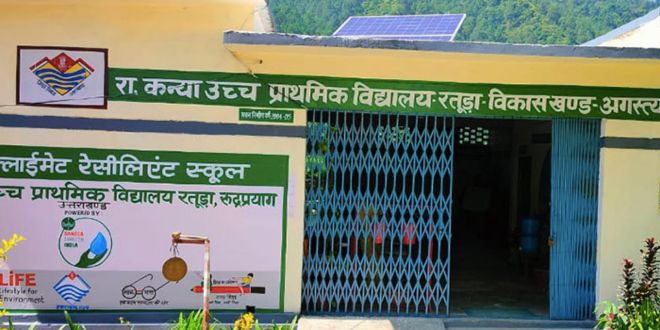
New Delhi: For over a decade, Dettol Banega Swasth India has been one of India’s most enduring public health campaigns. Launched by Reckitt, makers of Dettol, in partnership with NDTV, the initiative has consistently focused on improving hygiene, sanitation and overall wellbeing through large-scale awareness and behaviour change programmes. Over the years, the campaign has reached millions of Indians through interventions around hand hygiene, disease prevention, sanitation and healthy living. Expanding its public health mission to address one of the most pressing challenges of our time, the campaign has now turned its attention to the intersection of climate change, hygiene and child health through the Dettol Climate-Resilient Schools initiative in Uttarakhand.
Watch: India’s 200th Menstrual Waste Free Village
Building Climate-Resilient Schools In Vulnerable Regions
The initiative was implemented in the climate-sensitive Himalayan districts of Uttarkashi, Rudraprayag and Chamoli, regions that frequently face flash floods, landslides and seasonal water scarcity. Recognising that environmental shocks can disrupt water, sanitation and hygiene (WASH) infrastructure and increase children’s vulnerability to disease, Reckitt developed an integrated school-based intervention model known as the 3C Framework – Campus, Curriculum and Collaboration.
The model combines climate-resilient infrastructure upgrades, climate and hygiene education and community engagement to create safer and healthier learning environments.
Under the Campus pillar, schools received infrastructure improvements such as solar energy systems with battery backup, restoration of water supply pipelines, rainwater harvesting systems, greywater recycling mechanisms, low-flow handwashing stations, upgraded sanitation facilities, waste segregation infrastructure and school gardens.
The Curriculum component introduced climate literacy, biodiversity awareness, experiential STEM learning and hygiene education through practical, activity-based learning. Eco clubs and student-led climate adaptation projects were also integrated into school life.
Meanwhile, the Collaboration pillar focused on building partnerships with communities, local stakeholders and government bodies to ensure long-term sustainability and maintenance of the interventions.
Independent Evaluation Shows Promising Results
To assess the effectiveness of the programme, an independent six-month impact evaluation was conducted by AIIMS Rishikesh across 13 government schools in Uttarakhand. The study tracked 412 students from Classes 1 to 10, including 203 students in intervention schools and 209 students in control schools. The findings demonstrated significant improvements in health, hygiene and water access among students in intervention schools.
Hand hygiene compliance in intervention schools reached 18.3%, compared to 5.3% in control schools. Knowledge of the six essential handwashing steps stood at 71.4%, more than double the 30.6% recorded in non-intervention schools. Safe drinking water access was reported at 75% in intervention schools, compared with 36.4% in the control group.
The study also found that 76.4% of children in intervention schools recorded normal height-for-age levels, compared to 63.2% in control schools. Notably, intervention schools reported zero confirmed waterborne disease cases and no severe anaemia cases.
Beyond measurable health outcomes, the programme also triggered what researchers described as “reverse learning”, with students carrying hygiene lessons home and influencing family practices around handwashing, safe water usage and sanitation.
A Blueprint for Climate and Public Health Resilience
The initiative highlights how schools can function not only as centres of learning but also as critical public health infrastructure. By combining climate-resilient WASH systems with behaviour change and community participation, the programme offers a scalable model for protecting children from climate-linked health risks.
As climate change continues to intensify environmental vulnerabilities, the Dettol Climate-Resilient Schools initiative demonstrates how integrated interventions can help build healthier, safer and more resilient communities – one school at a time.
Also Read: Campaign Ambassador Ayushmann Khurrana Leads Powerful Discussion On Sanitation Workers’ Dignity


