

New Delhi: The Season 12 finale of NDTV–Dettol Banega Swasth India turned the spotlight on what “freedom” really means in today’s India. From disease-free childhoods to clean air and water, the guests framed health as the foundation of true independence. Their words, woven through personal stories and hard data, painted a picture of a movement that has moved beyond slogans into sustained action.
Ayushmann Khurrana: Real Freedom Is Freedom From Disease
As campaign ambassador, Ayushmann Khurrana opened the finale by redefining independence. He reminded viewers that political freedom is only the first step; the real test is whether every Indian can live without the constant threat of preventable illness.
For the past 12 years, Dettol Banega Swasth India has been more than a campaign – it has been a movement toward true freedom,” he said. “On 15th August, we remember our independence, but real freedom is not just political. It comes when we make our country disease-free and sanitation-strong. Only then will we build a Swasth Bharat, Swachh Bharat, and truly an Independent India.
Ravi Bhatnagar, Director of Corporate Communications & Corporate Affairs (South Asia, MENARP, Reckitt), traced the 12-year arc of the movement, from the launch of Banega Swachh India in 2014 to the broader Swasth vision today. He underscored the scale of the effort and its ambition to go global. “NDTV has been a wonderful partner to Reckitt for 12 years, and the journey is far from over,” he said.
From the launch of Banega Swachh India in 2014 to the shift from Swachh to Swasth, we are proud to be working across 315 aspirational blocks in India. This is not just a hygiene or sanitation programme – it is an integrated health effort that has reached around 1.4 billion people. We hope to take Dettol Banega Swasth India global.
Neha Dhupia: The Best Way to Protect Women Is Through Education
Actor and long-time supporter Neha Dhupia spoke about the intimate link between self-care, nutrition and hygiene, especially for women and mothers. She stressed that change begins at home, with everyday habits that protect families.
Self-care for women is essential. Whether it is cleanliness or nutrition, everything matters. The best way to protect women is through education on health, nutrition, and hygiene so these habits become a natural part of life.
Her message was clear: when mothers are empowered with knowledge, entire households become healthier.
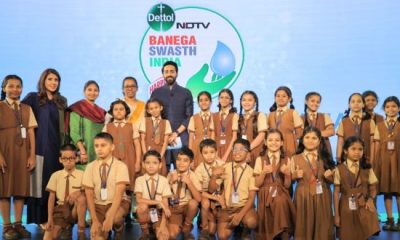
In Pics: Dettol Banega Swasth India Season 12 Finale: Redefining Independence Through A Healthier Nation
Dr. Neelam Kler: Maternal and Child Health Still Need Greater Attention
Padma Bhushan awardee Dr. Neelam Kler highlighted both progress and persistent gaps. She pointed to NFHS-6 data showing a decline in stunting and wasting among children, but warned that maternal and child health remain interconnected challenges.
India has had several malnourished children who are stunted and severely wasted, making them more vulnerable to infection,” she said. “The good news is that the National Health Family Survey (NFHS-6) shows a decline in it. But maternal and child health still need greater attention, because everything is interconnected.
She praised the campaign’s sustained efforts in strengthening these areas through community initiatives.
Watch: Policy, Innovation, Community: Neeraj Jain on Building A Resilient, Swasth India
Sai Damodaran: From Open-Defecation-Free to Menstrual Waste-Free
Sanitation pioneer Sai Damodaran reflected on how the mission has evolved alongside national programmes. He spoke of moving beyond basic sanitation to address menstrual waste in villages and schools.
My sanitation mission began many years ago, and with the launch of the Swachh Bharat Mission in 2014, sanitation coverage expanded across rural and urban India,” he said. “Through our partnership with Dettol Banega Swasth India, we are not only working toward open-defecation-free areas, but also menstrual waste-free villages and schools.
Priya Malik: Clean Water and Clean Air Are Freedoms Too
Poet and new mother Priya Malik brought a lyrical urgency to the conversation, connecting environmental health to parenthood. She described how becoming a parent sharpened her sense of responsibility toward the planet her son will inherit.
Health is correlated with our environment for sure,” she said. “I became more conscious of environmental issues after becoming a mother, because I wanted to raise my son close to nature. We are not only becoming environmentally aware – we are trying to live that way. Clean water and clean air are freedoms too. The real question is: what are we leaving behind for the next generation?
Watch: Art for Uncomfortable Truths: Priya Malik on Health, Environment and Parenthood
Innovation, Policy, Community: Neeraj Jain on Building a Resilient, Swasth India
The conversation widened as public health veteran Neeraj Jain reflected on India’s digital health leap, from ABHA IDs to connected health ecosystems. He argued that innovation, policy and community action must move together to build a more resilient, disease-free India, especially when they reach the last mile through local champions and sustained financing.
From Swachh Bharat to Freedom from Illness: Dr. Indira Chakravarty on Milestones and Gaps
Public health pioneer Dr. Indira Chakravarty rounded off the expert voices by reflecting on decades of change, celebrating milestones in sanitation and disease control while pointing to gaps that still remain. Her insights framed the journey from Swachh Bharat to a future where freedom from illness is a reality for all, especially in underserved communities.
The finale closed not with a celebrity, but with the people who keep the movement alive every day. ASHA workers and sanitation workers took centre stage to share their stories, challenges and kits, and were honoured with the “Swasth Azaadi Pin” as a salute to their relentless work in communities, keeping families safe from disease and ensuring freedom from illness. As the telethon ended, the message was clear: the next 12 years will be written not just in policy documents, but in the daily choices of millions who decide that true freedom begins with a healthy, hygienic India.
Watch: Heroes of a Healthy India: ASHA and Sanitation Workers Take Centre Stage